
Infosys was the top gainer in the Sensex pack, rising over 2 per cent, followed by Bajaj Finance, HCL Tech, Tata Steel, Tech Mahindra and NTPC. On the other hand, Maruti, Sun Pharma, HUL and ITC were among the laggards. Nifty rose 122.15 points to 17,343.55.

Rajan, 57, who was RBI governor for three years until September 2016, is currently working as a professor at the prestigious University of Chicago.

India Inc on Friday said it is looking forward to a repo rate cut in future as cost of funds has to come down in coming times, and expects continuation of accommodative policy stance by the Reserve Bank of India (RBI). The RBI decided to leave the benchmark interest rate unchanged at 4 per cent but maintained an accommodative stance, as the economy faces the brunt of the second COVID-19 wave. Sanjay Aggarwal, president of PHD Chamber of Commerce and Industry, said the RBI has maintained an accommodative stance as long as necessary to revive and sustain growth on a durable basis and to mitigate impact of COVID-19, apart from an aim to keep inflation within the target.

Bibek Debroy raised seven questions about the new institution.
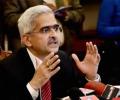
Many analysts over the past week have said the RBI has legroom to cut rates to the tune of 65 bps by June and some like Barclays and BofA have also spoken about the likelihood of an inter-meeting cut.

During the day-long visit, the Pakistani delegation will hold talks with Afghanistan's acting Foreign Minister Amir Khan Muttaqi and call on leadership of the interim government in Kabul and other Afghan leaders, according to Foreign Office.

Snooping is one of the oldest peccadilloes of man, observes Ambassador M K Bhadrakumar.

Reddy has worked to reform the economy.

Basu said there are a couple of big ticket items on the agenda.

Deutsche Bank expects the Sensex to climb only 8% in 2017 to 29,000, and expects high volatility.

'So you have welfare programmes, you reach out to the poor, you cut out the middlemen, you cut out the leakages and you try to raise the standard of living.'

The prime minister's economic advisory council was disbanded early on, and not reconstituted.

The Reserve Bank of India (RBI) on Friday kept the key repo rate unchanged at 4 per cent in view of rising inflation and faint signs of economic growth amid the gradual lifting of coronavirus related countrywide lockdown.

A magisterial court had on July 2 dismissed his bail plea and sent him to 14-day judicial custody (JC) in the case, citing the nature and gravity of the offences against the accused and observing that the matter was at an initial stage of investigation.
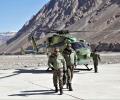
'This reluctance to respond forcefully to Chinese PLA provocations and outright aggression has as much to do with Prime Minister Modi personally, as with the institutional mindset of the MEA or even the Indian Army.' 'They are scarred by the 1962 War and are still cowed by China.'
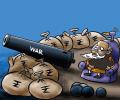
Inflation targeting has worked well and the government must stay with it, and the framework is going to work well in the period ahead also, former RBI Governor D Subbarao said on Thursday. He also said low inflation contributes to sustainable growth. Addressing the 'Times Network India Economic Conclave' virtually, Subbarao said the government's proposal to privatise some public sector units is not akin to selling family silver but it is a route for putting India on a sustainable growth path.

Tata Steel was the top loser in the Sensex pack, shedding over 2 per cent, followed by Sun Pharma, ICICI Bank, SBI, Kotak Bank and Dr Reddy's. NSE Nifty dropped 151.75 points to 15,727.90.

The outgoing Chief Economic Advisor will always be remembered for his remarkable passion, his large imprint on policymaking and the high level of public debate he fostered
Chetan Ghate, Pami Dua and Ravindra Dholakia have been appointed for 4 years
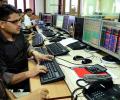
Titan was the top gainer in the Sensex pack, rising 3.5 per cent, followed by Kotak Bank, SBI, Maruti Suzuki, Bajaj Finance, HUL, Axis Bank and Sun Pharma. On the other hand, NTPC, Tech Mahindra, PowerGrid and Infosys were the laggards.

The President said he made the decision in consultation with European allies but added they may not be in a position to join the US in banning Russian energy imports.
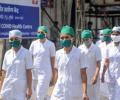
This step by the Modi government is in the right direction and will go a long way in safeguarding the interests of socially and economically backward communities, asserts Professor T V Kattimani, Vice-Chancellor, Central Tribal University, Andhra Pradesh, Vizianagaram.
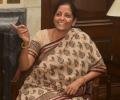
Finance Minister Nirmala Sitharaman will present her second Budget a little more than a month from now. Like any other FM, Sitharaman will depend on her team of bureaucrats and advisors to frame and present the Budget.
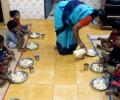
The Union cabinet on Wednesday approved the roll-out of the 'PM POSHAN in Schools' scheme that will provide hot cooked meal to students of elementary classes in government and government-aided schools across the country.

'Education is disconnected from social reality and does not even attempt to solve the real problems of our country,' observe Peehu Pardeshi and Sandeep Pandey.
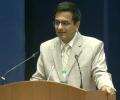
Observing that the Indian Supreme Court plays the role of a 'counter-majoritarian institution', Justice Chandrachud said it is the duty of the top court to 'protect the rights of socio-economic minorities'.
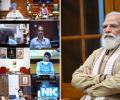
'In a serious fiscal situation like this, an ostrich-like focus on annual budgeting, event management and defensive rhetoric will only make matters worse,' warns Rathin Roy.

While most economies contracted in the second quarter of 2020, the Chinese economy grew by 3.2 per cent.

His visit to India followed a few cancelled plans since he took office in July 2019 due to the coronavirus pandemic crisis, with the two leaders holding several virtual talks and eventually meeting in person on the sidelines of the COP26 climate summit in Glasgow last November.

'In May 2020-2021, nearly 10 crores (100 million) lost jobs. 'Covid is not the reason for the present crisis. It aggravated the crisis.'

Very gradual fiscal consolidation glide path with looser-than-expected fiscal policy; good quality spending mix and reasonable assumption on fiscal math; and focus on privatisation, asset monetisation and long-term funding for infrastructure investments, according to Morgan Stanley, are the three key themes from the Budget 2021.
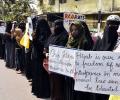
India and Indians can ignore Pakistan, but that cannot be said of other nations in the neighbourhood, where New Delhi's 'Neighbourhood First' policy constantly reverberates. Four of the eight SAARC member-nations are Muslim -- Afghanistan and Pakistan, Bangladesh and the Maldives. The rulers decide the nation's India or anti-India policy in the first two, and street-opinion contributes to the same in the latter two, points out N Sathiya Moorthy.

The Central Board of Direct Taxes (CBDT) has signed up the country's three top economic think tanks to arrive at an official figure. This will help the government frame policies to tackle the problem.
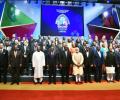
'During my visit to Japan and after meeting with Prime Minister (Shinzo) Abe, I gladly recall that in our joint declaration we mentioned Asia-Africa growth corridor and proposed further conversation with our brothers and sisters of Africa,' Prime Minister Modi said.

'These people jump up and down, excitedly waving their arms about to catch the attention of one political party or the other.' 'This mutant can be very dangerous,' observes T C A Srinivasa-Raghavan.

Dr Mitra called the Pandara Road crowd a 'cheerful collective of young dreamers,' united in its 'love and pride for the newly Independent India,' despite 'sharp disparities in background, temperament and attitude.' Dr Shreekant Sambrani recalls his encounters with the legendary economist who passed into the ages.

The Sensex ended up 244 points at 28,504 on strong global cues.

Prime Minister Narendra Modi on Thursday said efforts are on to remove AFSPA completely from the northeast region.

Rahul Gandhi said he had helped the party conceptualise its 'Nyay' scheme to help remonetise the economy.

Dubs Modi government a "one trick horse" which will make the Hindu-Muslim issue the dominant one in political discourse; asks Opposition to field one candidate in every seat against BJP nominee in 2019 polls.
 © 2026 Rediff.com - Advertise with us - Disclaimer - Privacy Policy - Sitemap - Feedback - About us - Terms of use - Grievances